.webp)
At its annual conference, Webflow just announced one of the biggest changes in its history by unveiling an entirely new platform: Source.
We were there. And after watching the demos, talking with the Webflow teams, and speaking with several partners across the ecosystem, we’re taking a closer look at what Source really is, its main features, and, above all, what this launch says about the platform’s new strategy.
Why Webflow is launching Source now
In a market where traditional CMSs are gradually losing ground, where the use of AI and agents is exploding across marketing teams, and where new “Website AI builders” are emerging, Webflow had to react.
So, after several years of gradually integrating AI features into its product, the company is now making a much more radical choice: starting over on an entirely new foundation with Source.
And when you think about it, this choice makes a lot of sense.
From no-code to an AI-native platform
Webflow was historically built around a simple idea: allowing humans to visually generate code without having to write it.
The user interacts with an interface. Webflow generates the code behind it.
But the product wasn’t designed at a time when AI agents would be capable of directly understanding, modifying, and evolving that code to address teams’ needs and challenges. And completely transforming Webflow’s historical architecture to make it truly AI-native would have been risky (that’s where the entire business model currently lies) and extremely complex, if not technically impossible.
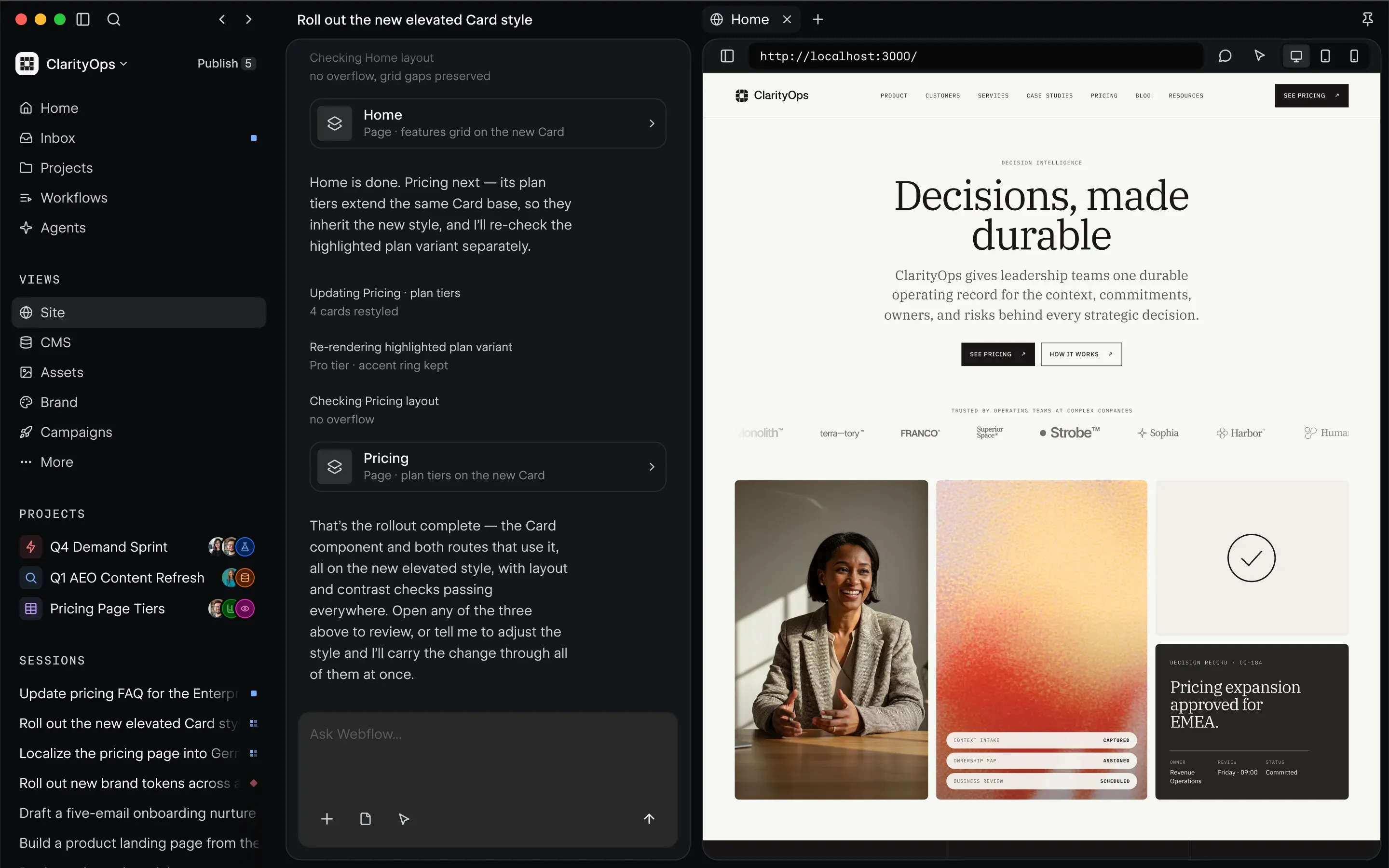
Source introduces a new principle: code (which, by the way, has become trendy again in recent years) becomes the “source of truth,” the common foundation on which agents, visual editing, and developers now work.
Source features
To understand Source, rather than simply listing all the features, we’re going to group them around four main building blocks: Build, Interface, Brand & Governance, and Grow.
1. Build: build and evolve
The first building block focuses on creating the website and its new technical foundation.
Code as source of truth
Code becomes the common foundation on which agents, developers, and visual interfaces work.
AI Agents
Agents are no longer only there to respond to prompts. They can become true collaborators capable of creating, analyzing, recommending, and executing actions.
Visual Development
Visual editing remains at the heart of the experience, but changes made visually are applied directly to the same code.
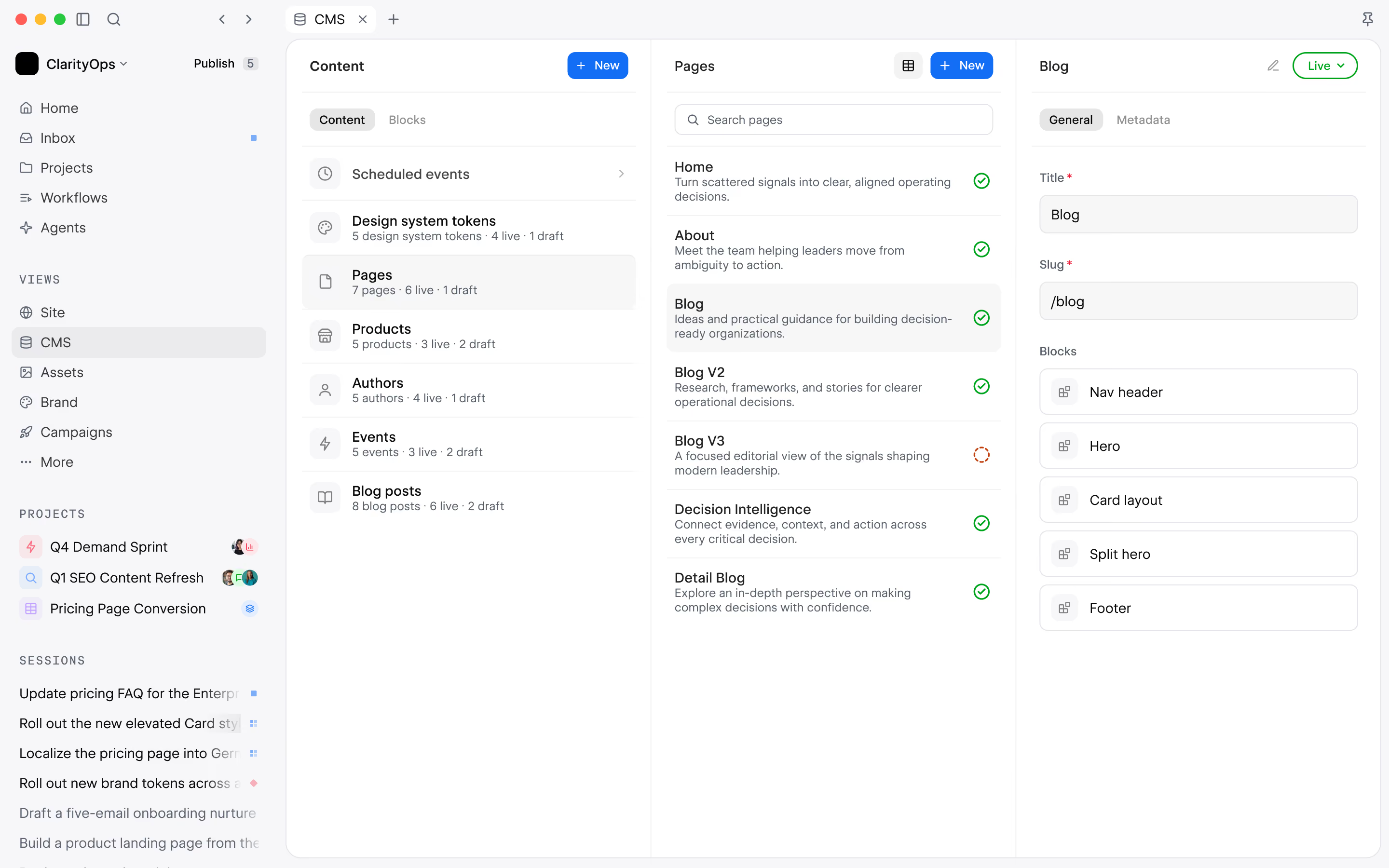
Headless CMS
Webflow’s future CMS should be much more flexible, including the ability to use it headlessly.
Composable Stack
Source will also be able to connect to existing environments: Next.js, Astro, Webflow, or other stacks.
2. Interface: a different experience for every role
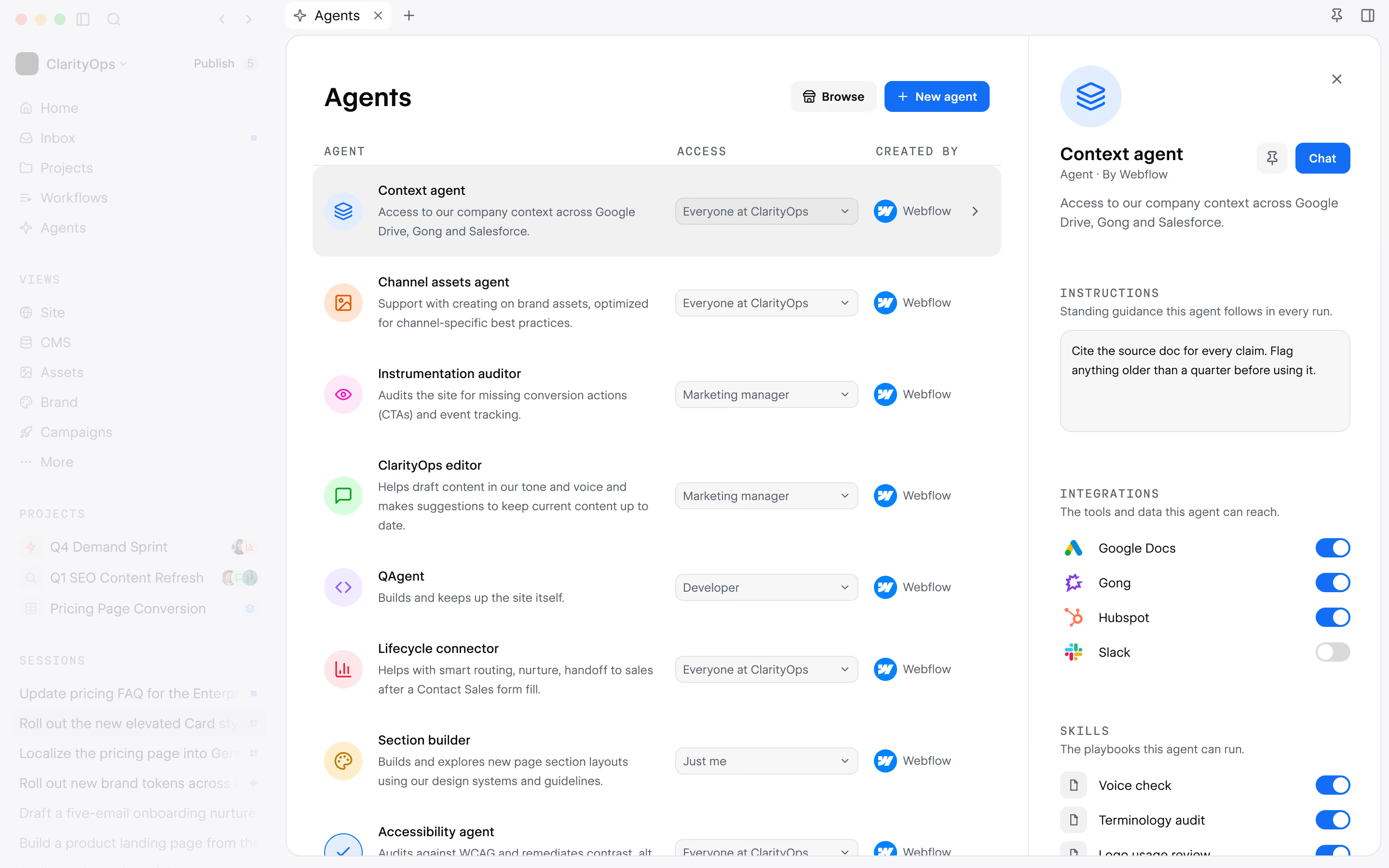
One of the most interesting concepts introduced with Source is called Views. Until now, everyone worked more or less in the same product.
With Source, each user will be able to have an interface that truly matches their role and responsibilities.
Views
Each role can have an interface adapted to its needs. For example, an interface tailored to CRO, or an interface dedicated to GEO tracking.
Custom Views
Teams can also create their own workspaces around specific workflows.
Role-based workspaces
A marketer, a designer, and a developer can therefore work in the same environment without necessarily seeing or interacting with the same things.
Inbox / Tasks
Agents can directly surface recommendations, tasks, or opportunities in the workspace of the relevant person.
Source therefore moves away from being a simple website builder and closer to a truly configurable work environment.
3. Brand & Governance: giving autonomy without losing control
Obviously, allowing agents to modify a website autonomously immediately raises a question: how do you prevent them from doing whatever they want?
That’s where the entire Brand & Governance layer becomes important.
Brand System
Components, styles, and tone of voice can be integrated directly into the system to define the framework for what both humans and agents produce.
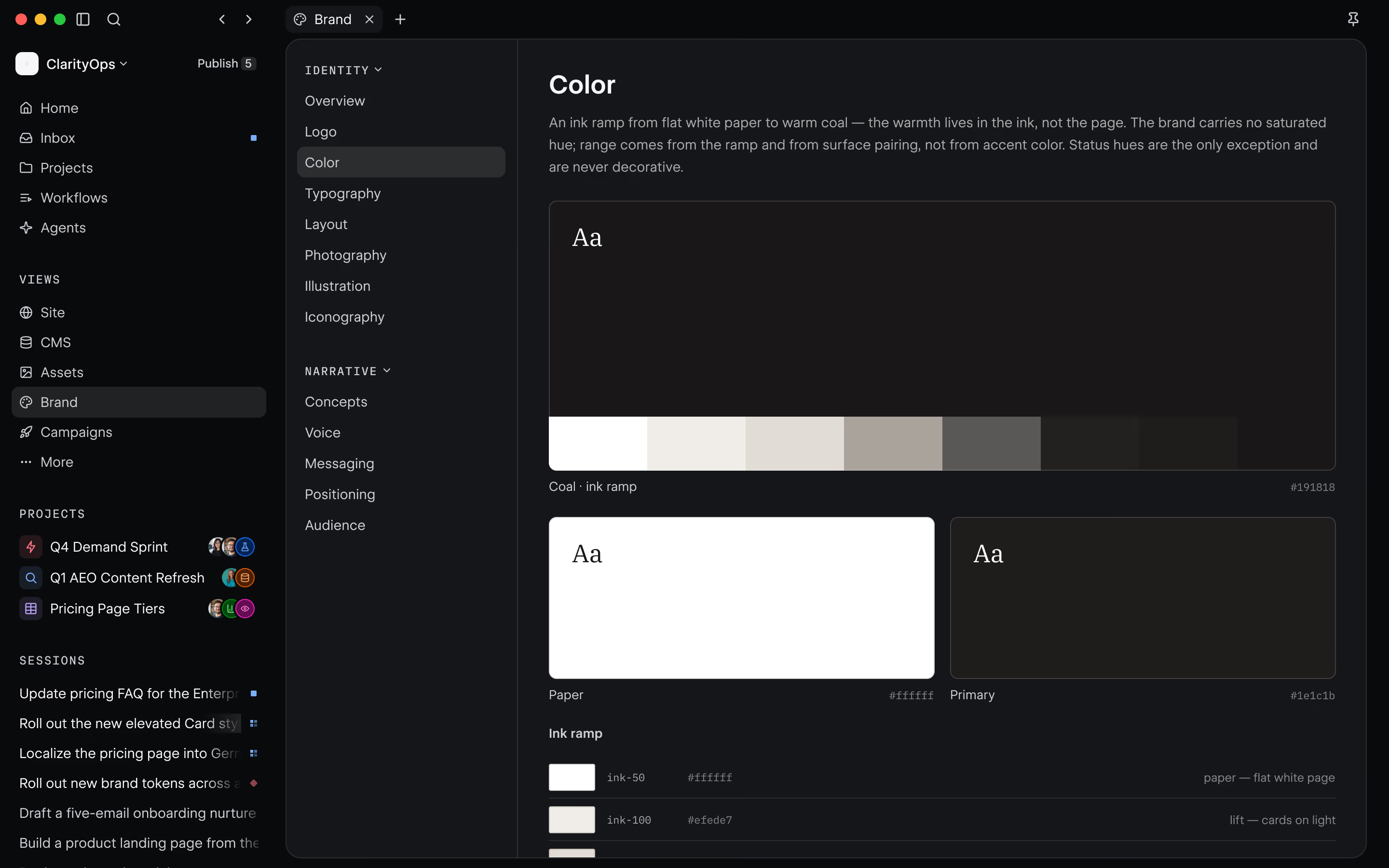
Guardrails
Rules can limit the scope of agents’ actions.
Roles & Permissions
Each human or agent can have specific permissions.
Approval Workflows
Some actions can be published automatically, while others require human approval.
Audit Logs
All actions can be tracked.
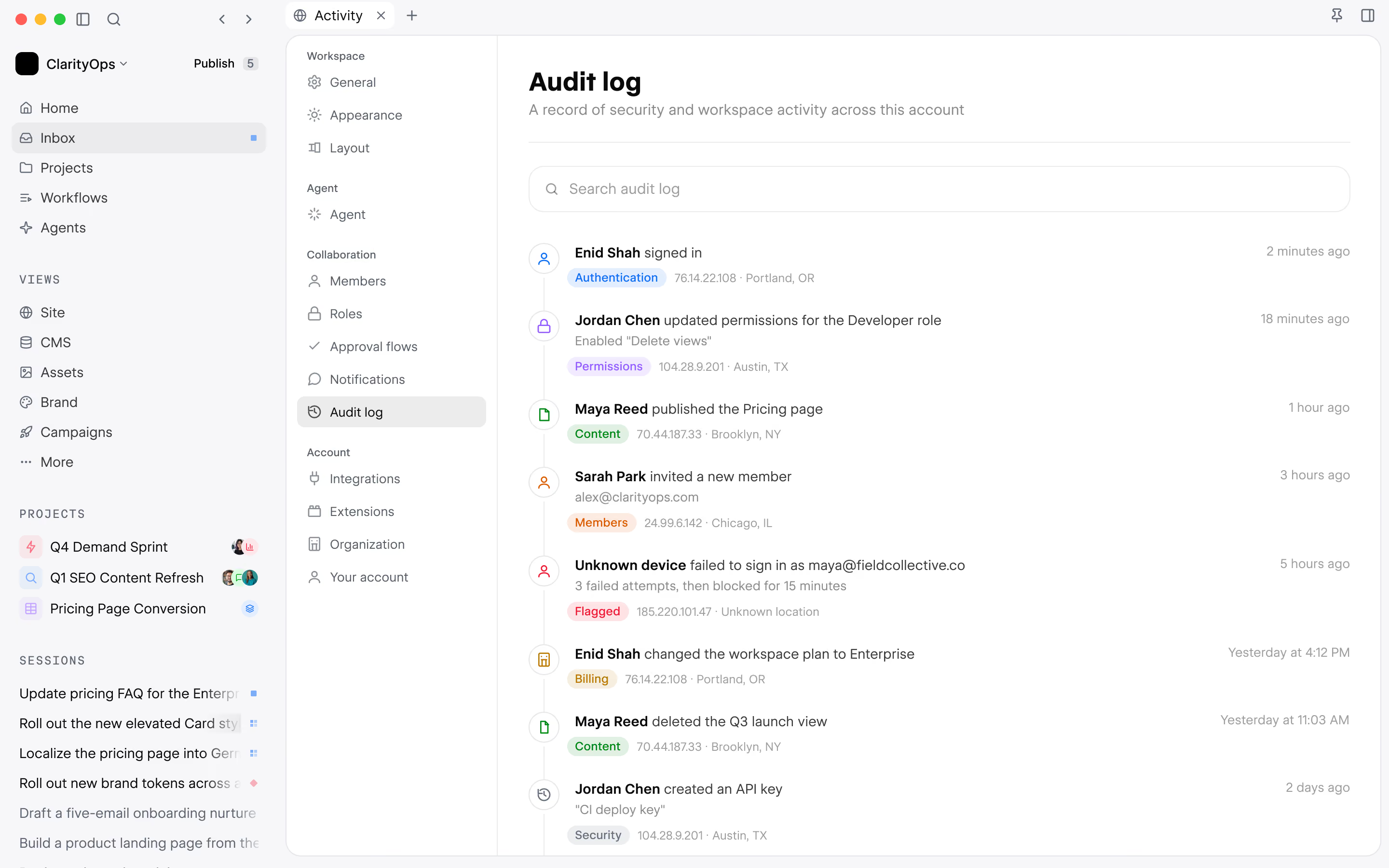
Human / Agent Governance
Organizations can therefore choose precisely how much autonomy they want to give their agents.
Where vibe coding primarily provides freedom, Source aims to provide a framework for using it at an enterprise scale.
4. Grow: evolving the website after launch
This is probably where the Source vision becomes the most interesting: managing and optimizing the website after publication. The famous client “hand-off” moment that we’re constantly trying to optimize to give them more and more autonomy.
With Source, Webflow primarily wants to address everything that happens next. The website should be able to learn, evolve, and perform continuously.
AEO / AI Discovery
Detect visibility opportunities in AI search engines and assistants and suggest fixes.
CRO & Experimentation
Identify underperforming pages and create or test different variants.
Campaigns
Create and deploy marketing campaigns.
Content Workflows
Produce and evolve content with the help of agents.
Localization
Deploy and optimize experiences across multiple markets.
Agentic Workflows
Enable agents to continuously measure, recommend, and execute actions. Some of these building blocks already exist, or will exist, in different forms within the Webflow ecosystem. Source’s promise therefore seems to be less about replacing each of these tools than becoming the layer capable of connecting and orchestrating them.
So, in short:
Source = code + visual builder + AI agents + martech stack + governance in the same environment.
What Source changes for Webflow
A new audience
Beyond the product itself, Source primarily marks a shift in positioning.
Webflow has historically grown among designers, developers, and “no-code” builders. For several years now, the company has already been trying to reach marketing teams and large enterprises much more directly.
Source makes this direction even more obvious.
Webflow wants to become the environment where marketing teams build, manage, optimize, and evolve their web presence with agents. And inevitably, that also changes the competition.
New competition
Webflow is no longer competing only with WordPress, Framer, Contentful, or other CMSs and website builders.
With Source, the competition also becomes much more direct with the new AI website builders. But with a fairly different approach: while many of these tools focus primarily on creating a website from scratch, Source also aims to connect to an existing website and stack.
In other words: you’ve already built your website somewhere else? You can connect it to Source and use its agents to evolve it.
Source therefore positions itself heavily around what happens “after”: analyzing, optimizing, and continuously evolving an existing website. An area that is still relatively underserved by AI-native stacks today.
In this vision, the approach reminds me a lot of Ploy.ai, launched by Bryant Chou after he left Webflow.
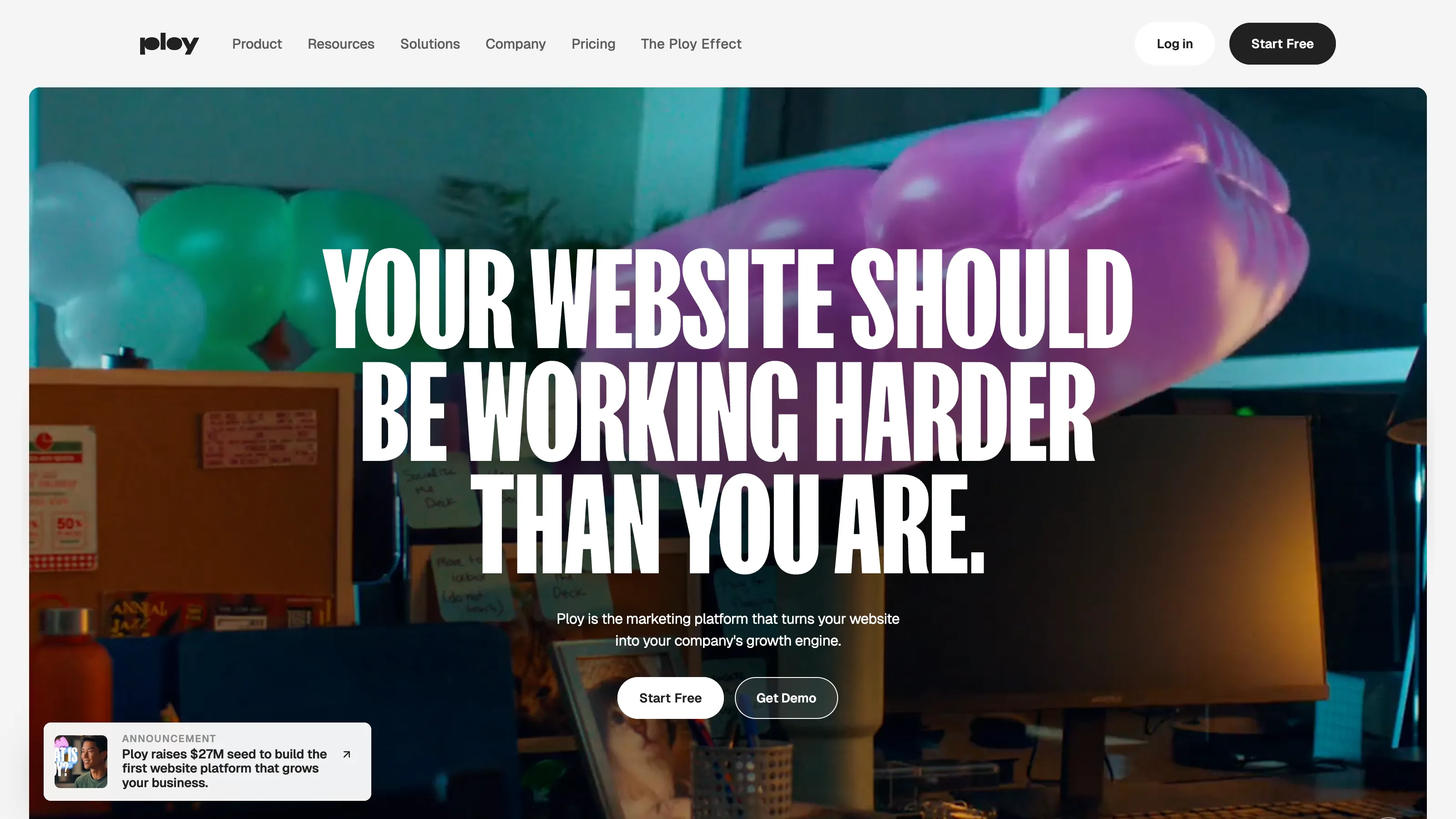
Bryant is one of Webflow’s co-founders and obviously knew the limitations of the “historical” product very well when it comes to turning a website into a continuous growth system.
A new role for agencies
For agencies, this also raises another question: if an increasing share of development becomes agentic, where does our value shift?
Probably more toward strategy, design, brand, growth, governance, and the ability to put the right systems in place around agents.
A recent video from Flux also discusses this topic with a telling chart. The chart seems to show a gradual reduction in the role of traditional development, with an increasing share of the work handled by AI. The role of agencies would then refocus more around design and growth.
.webp)
It’s a vision we’ll expand on in the conclusion, but one I’m fairly aligned with.
The community’s first reactions
Reactions following the announcement have been fairly mixed.
Among some long-time builders, there’s a lot of confusion. Webflow is gradually moving away from its positioning centered on designers and developers to speak more and more directly to marketing teams. And for some users, this change can understandably be unsettling.
But after several conversations with other agencies and ecosystem players during the conference, I also sensed quite a bit of relief.
For many, Source appears to be a necessary shift in a market that is evolving extremely quickly, and remaining positioned solely as a visual website builder would probably have been a much riskier strategy.
Of course, this change will have consequences for our roles and our organizations. But it will also create a huge number of new opportunities.
Our take on Source
The vision is strong. Now, we still need to see the execution and its price.
On paper, Source responds fairly directly to what is happening in the market, with marketing teams looking for more autonomy and AI integrated into their tools.
For several years, we’ve been trying, through components, the CMS, and MCPs, to make client hand-offs easier so they can evolve a website after launch, and Source, on paper, should be able to accelerate that.
From an agency perspective, I think designers, as well as developers and PMs, will be more and better stimulated by this kind of platform, which brings their work closer to marketing challenges and its impact.
But there are still questions.
The questions that remain open
What will Source cost?
For now, no official pricing has been announced.
The Webflow teams still seem to be working on Source’s pricing model.
Webflow already uses a credit system for some AI features. So it wouldn’t be surprising if part of the pricing eventually relied on usage, credits, or tokens, as is already the case with many AI-native players.
But nothing has been confirmed today.
And pricing will obviously be critical, because usage-related costs can rise quickly and, as both companies and agencies, we are becoming increasingly vigilant about our AI usage costs.
Webflow or Source: what brand strategy?
.webp)
I’m curious to see how the naming and overall architecture of Webflow’s products will evolve. Until now, we had Webflow and different building blocks around the product (Webflow X): Analyze, Optimize, Localization, AEO, etc.
We now also have Source by Webflow, which seems to be becoming an environment of its own.
Webflow was a strong brand name: what direction will they take if Source becomes successful?
Opening the door to an acquisition?
For several years, the company seemed to be building a trajectory that could lead to a potential IPO.
With Source, it is also potentially becoming more strategic within the new market for AI platforms and agents.
Is Webflow primarily looking to build a major independent web marketing platform? Or could this new positioning one day open up other strategic scenarios, including a potential acquisition?
Obviously, it’s difficult to go any further today without entering into speculation.
Conclusion
In short, to wrap things up. For thirteen years, Webflow has tried to transform the way we build websites. With Source, Webflow now wants to transform the way marketing teams and their agents operate, evolve, and grow them.
But for now, all of this remains a promising vision, as the tool is currently only available in research preview.
Learn more?
At Digidop, we should be among the first agencies able to test it more extensively.
So, if you want to follow our first tests, our feedback, and our upcoming content around Source, subscribe to our newsletter or our YouTube channel so you don’t miss anything.