Introduction
For years, visibility on the web meant ranking on Google for very specific queries, with the goal of reaching the top 3 positions for targeted keywords.
But search has fundamentally changed and become much more hybrid.
Following the rise of social media as discovery interfaces, a new evolution is being driven by AI Overviews and LLMs. ChatGPT, Perplexity, and Gemini are becoming entry points to information, brands, and products in their own right.
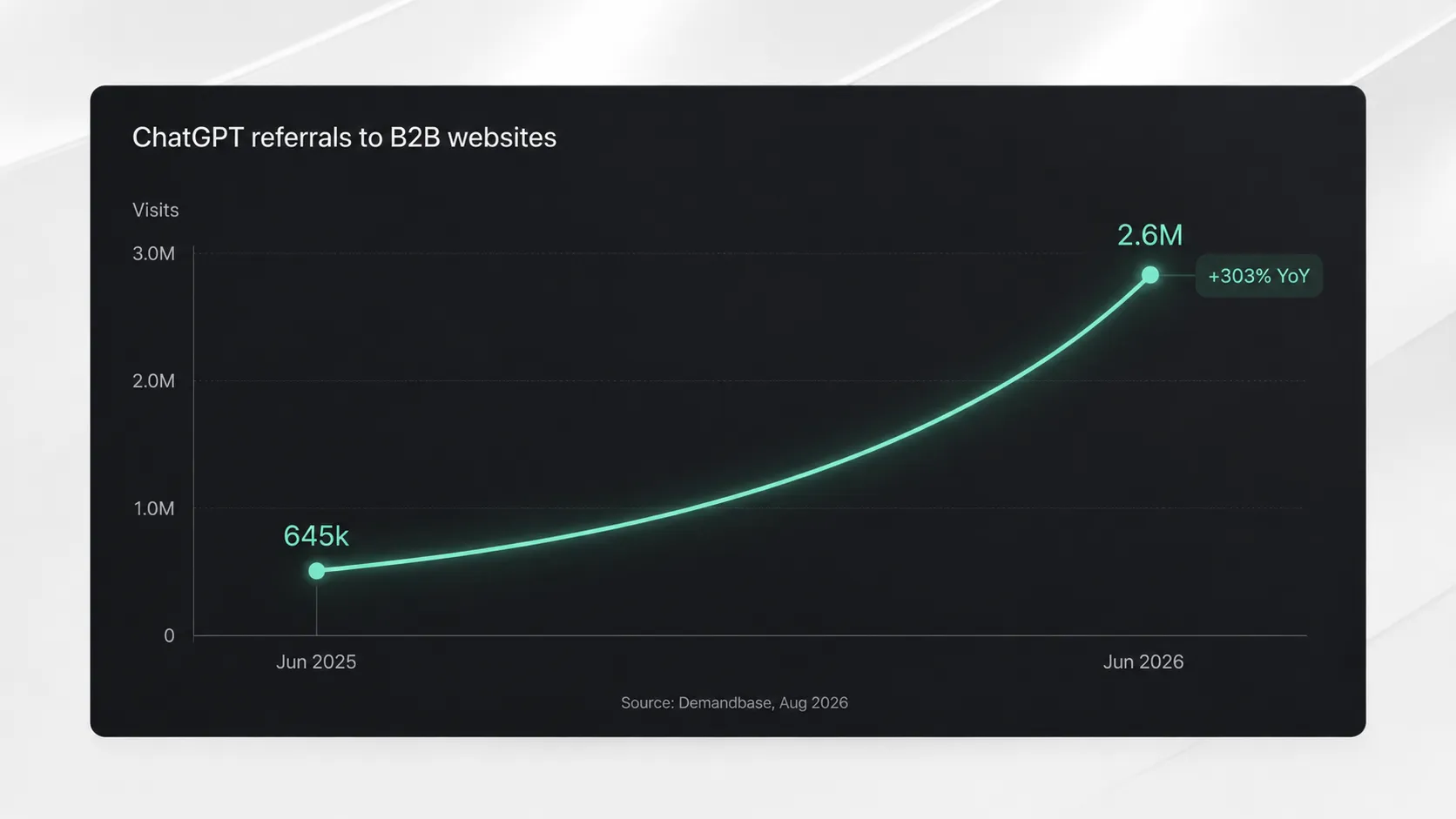
Demandbase just published August 2026 data: visits sent by ChatGPT to the B2B websites they track increased from approximately 645,000 in June 2025 to 2.6 million in June 2026, representing a 303% increase in one year. (Source : Demandbase)
So, how do you make sure your brand is part of the answers?
1. Understand how AI systems choose their sources
The main difference between SEO and GEO lies in their logic.
SEO: ranking well in a list of results.
GEO: becoming a source that is relevant and credible enough to be understood, cited, or recommended in an answer.
And in my view, GEO is ultimately the “web” translation of what has always made a strong brand: consistent marketing, a presence across multiple platforms, satisfied customers who talk about you, and a clear website that explains precisely what you do.
2. Make sure your website is accessible to AI
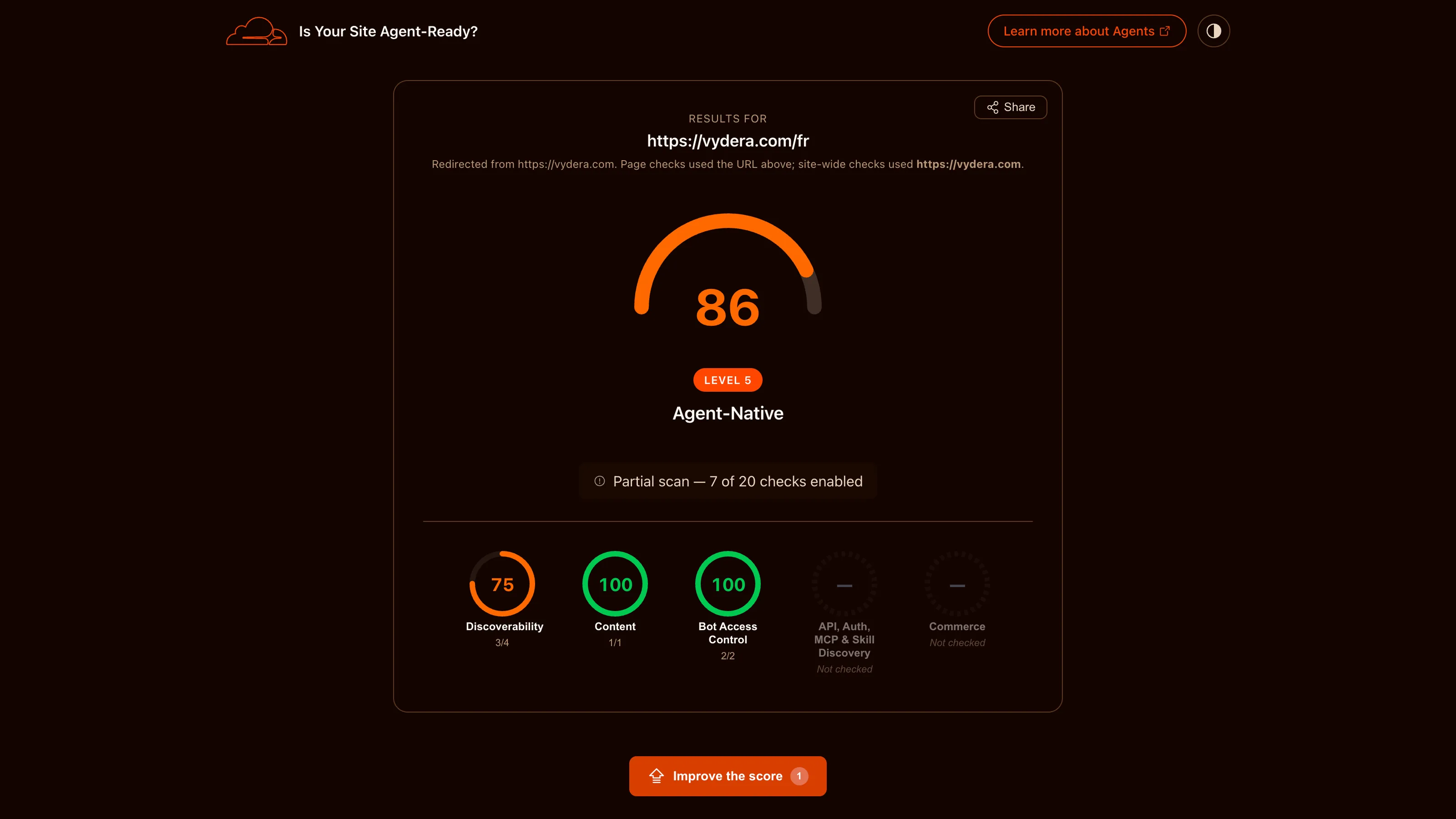
Bot traffic is taking up an increasingly significant share of the web — and this trend is only going to accelerate. But before optimizing your content for AI, make sure of one essential thing: that these systems can actually access your website, crawl it, and understand its content.
→ Learn more in our article to check whether your website is agent-ready and accessible to AI crawlers.
Note: for various reasons, some companies still choose to block these agents from crawling their websites. And in my view, that is a risky bet. While their arrival may currently disrupt the business models of some media companies, blocking them also means taking the risk of building a website that remains off the radar of new search and discovery behaviors.
3. Create content that answers real questions
The biggest change comes from the way people search.
In SEO, we have long optimized pages around keywords and highly targeted queries. This has sometimes resulted in unnatural content, with sections primarily designed to include specific terms.
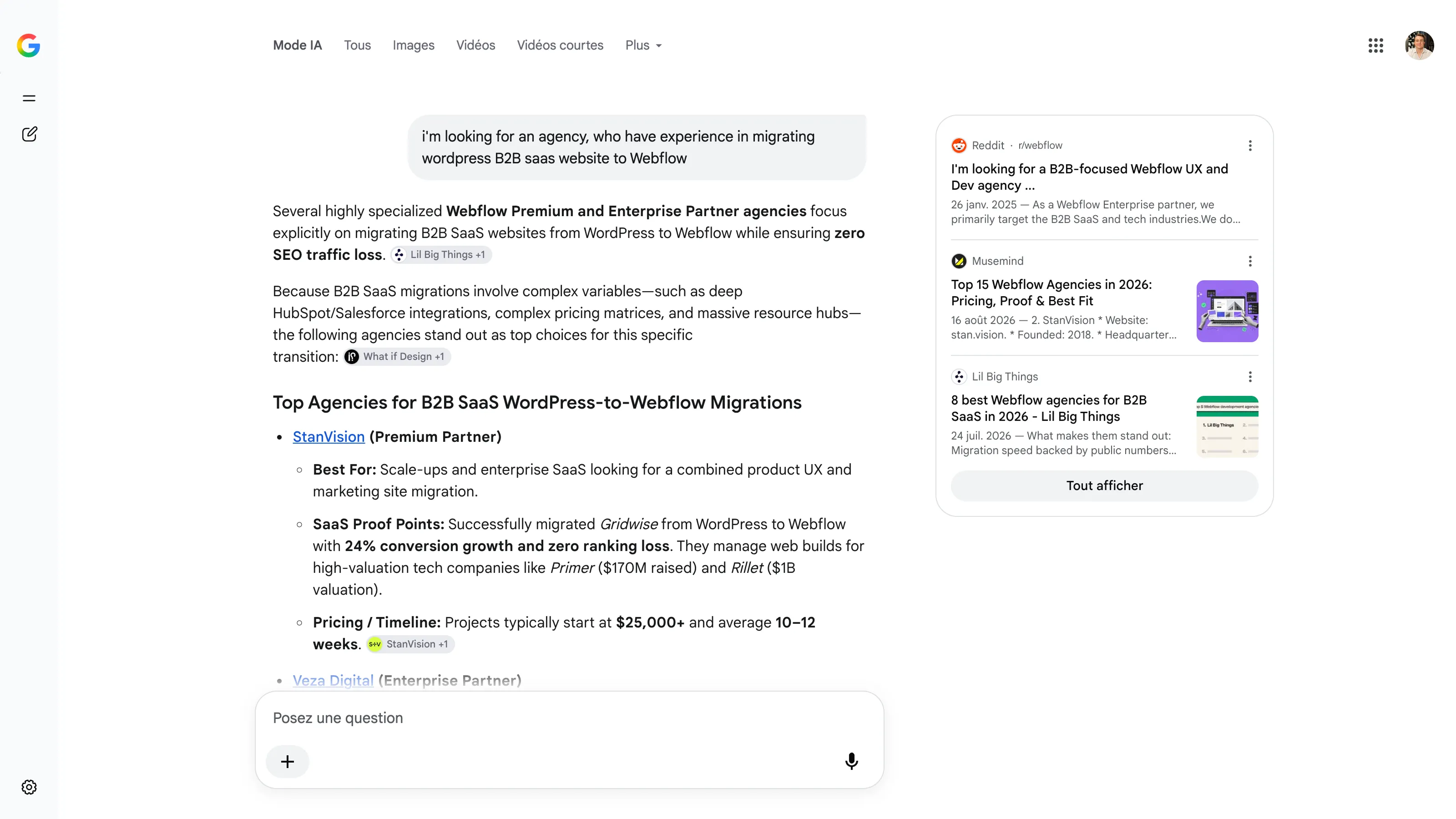
With AI search engines, search becomes more conversational: queries are longer, more contextualized, and phrased as real questions. Paradoxically, this allows us to return to more natural and genuinely useful content.
Example:
SEO: “Webflow agency”
GEO: “Which agency should I choose to migrate an international website to Webflow?”
To rank for these new searches, here is what we recommend before you even start writing:
- identify the questions your audience is actually asking;
- understand the intent behind each of these questions;
- create a page or section that answers them clearly;
- formulate an answer that is precise and structured enough to be understood and reused by an AI system.
Tip: the best way to find these questions is still to participate in sales calls. Write down the questions your prospects actually ask, then answer them directly in your content.
4. Structure your pages so they are easy to understand
In practice, you need to be increasingly precise: 1 page = 1 main topic or objective.
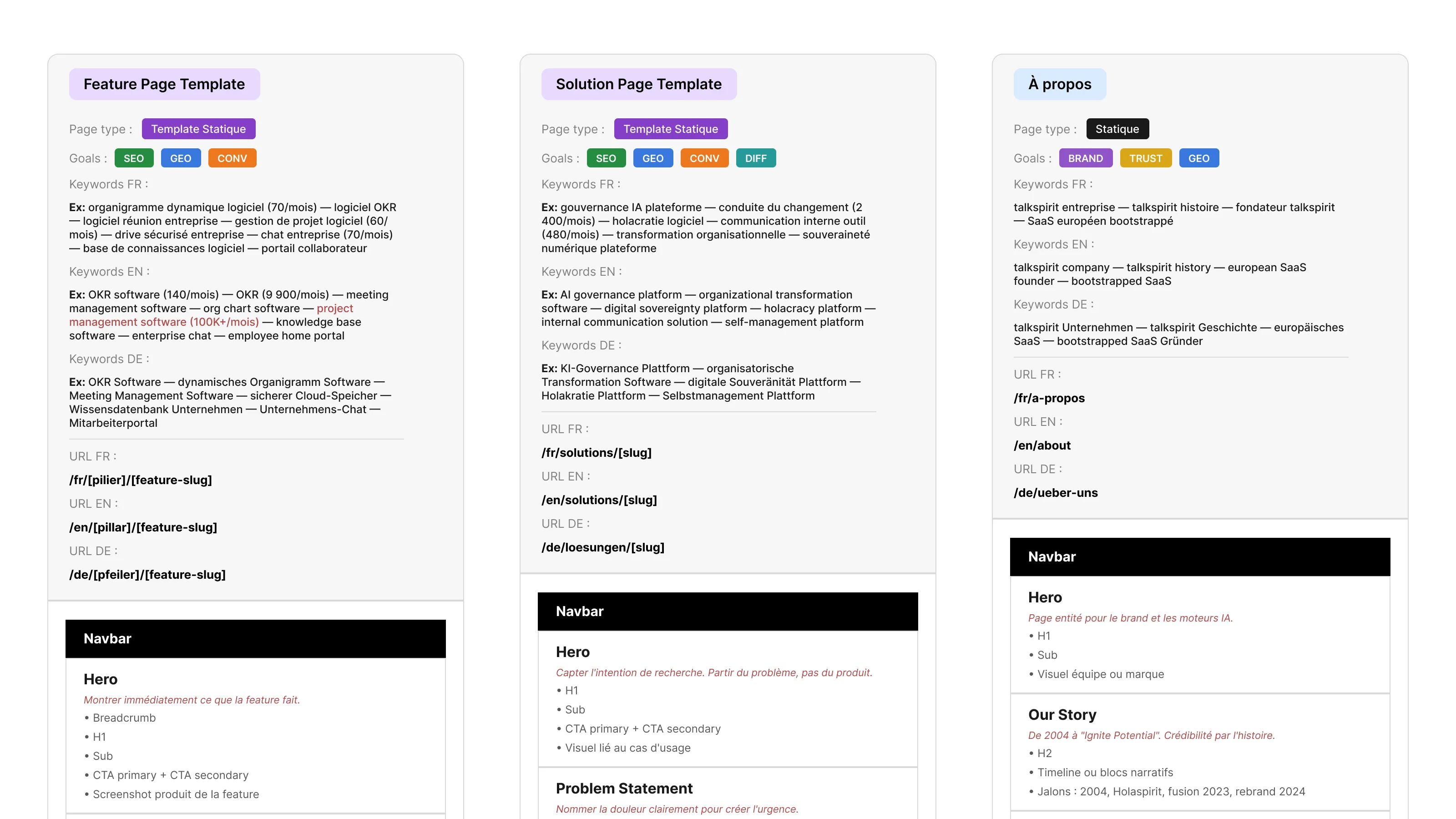
And there is no need to reinvent the wheel. Many best practices work just as well for SEO as they do for GEO:
- descriptive and explicit headings;
- direct answers to questions;
- short, structured paragraphs;
- lists and tables when they make information easier to understand;
- FAQs to cover complementary questions;
- clearly sourced and attributed data and statistics;
- explicitly named entities — for example, mentioning your brand in certain headings instead of using only generic phrasing.
The objective is simple: reduce ambiguity and allow search engines to quickly understand who you are, what you do, and which questions your content answers.
{{custom-blog-cta}}
5. Build your brand authority beyond your website
Just like in SEO, not everything happens “on-page.” A large part of GEO also depends on what the rest of the web says about you — in other words, your reputation and authority.
LLMs build their understanding of a brand from multiple sources, particularly those where your customers and prospects look for information, read reviews, and engage in conversations.
It is therefore important to develop your presence beyond your own website:
- in the press;
- on specialized websites;
- on comparison platforms;
- through your partners;
- in the communities where your audience interacts;
- in expert studies and reports;
- on review platforms.
The objective: do not be the only one saying that you are a reference. Make sure the rest of the web says it too.
6. Measure your visibility in AI answers
You know the famous quote: “What gets measured gets managed.” And in GEO, measurement is essential for several reasons:
- track your KPIs and monitor how they evolve over time;
- understand which actions are actually generating results;
- measure and justify the budgets invested and the ROI of your GEO strategy.
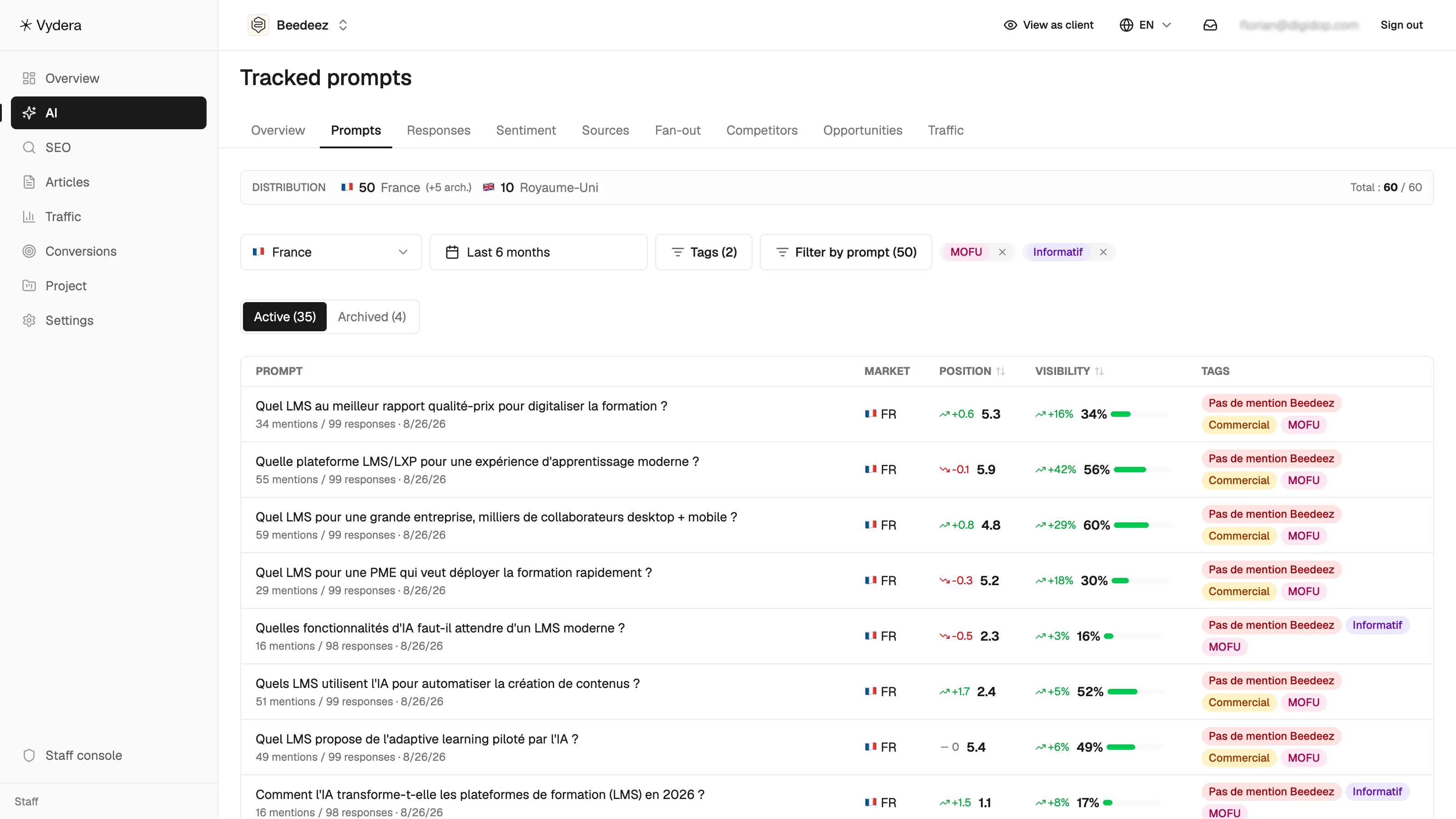
To track this visibility, most tools use prompt tracking. Through the APIs of different LLMs, they regularly test strategic questions to analyze whether your brand appears, how it is cited, and which sources are being used.
At Digidop, we use our own tool developed in-house with Vydera, among others. It allows us to track the prompts that matter to us in a highly customized way, internationally, with strategies and monitoring adapted to each country.
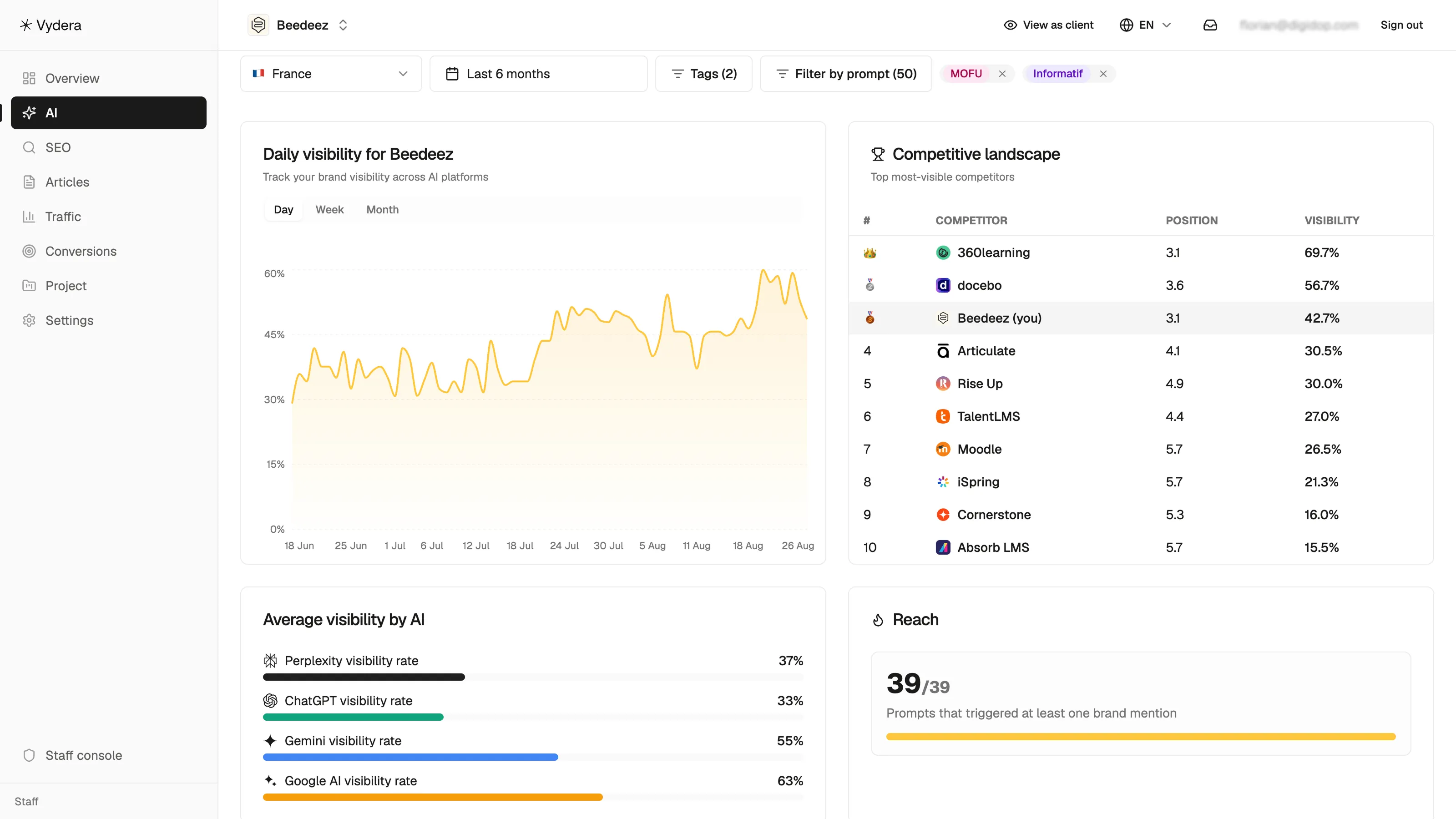
The objective: not simply to try to be visible in AI, but to understand precisely where, why, and how your brand appears.
SEO and GEO: Don’t Choose
Overall, search and demand for SEO agencies continue to grow. And I think that makes perfect sense: the arrival of AI Overviews and LLMs has made investments in Search Optimization even more valuable for companies.
Whereas before, companies invested heavily to “compete” for a presence among the top positions for a very specific query, visibility opportunities are now multiplying. A brand can now communicate its messages through different pages, on its own website but also beyond it, and appear at different stages of the search journey.
Web pages then remain the final destination: they can be designed simultaneously for ranking, brand understanding, and conversion, without sacrificing design or user experience.
The right strategy, in our view, is therefore hybrid. A “Global Search” approach that works on two dimensions simultaneously:
- SEO: Be found and rank well in search engines.
- GEO:Be understood, cited, and recommended in AI answer engines.
One does not replace the other. They complement each other
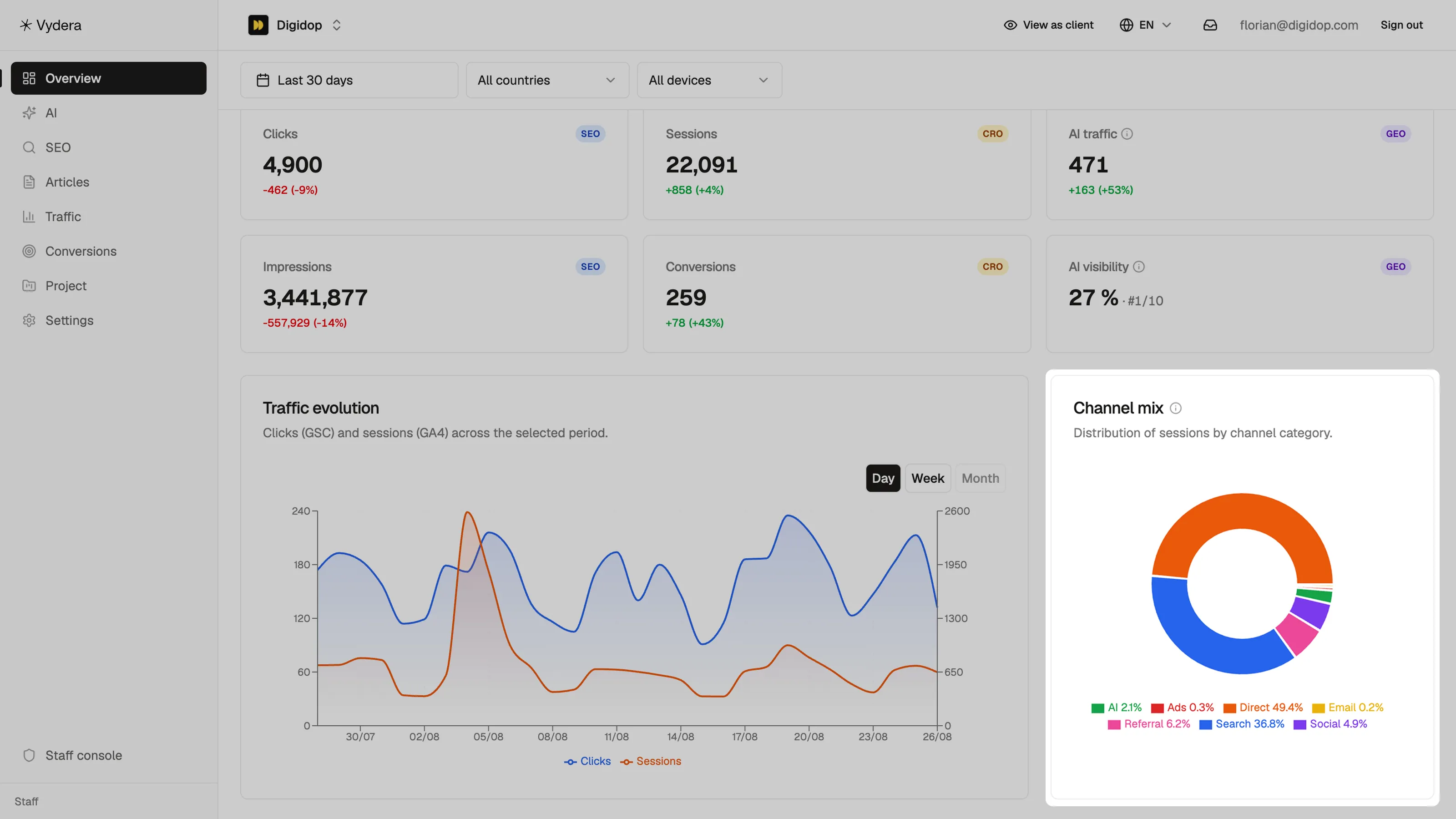
And this is all the more important because, even though referral traffic from AI is growing extremely quickly, traditional search engines still represent significantly higher traffic volumes today. The objective is therefore not to choose between Google and AI, but to build visibility that can perform everywhere your audiences search.
Go Further With Our GEO Guide
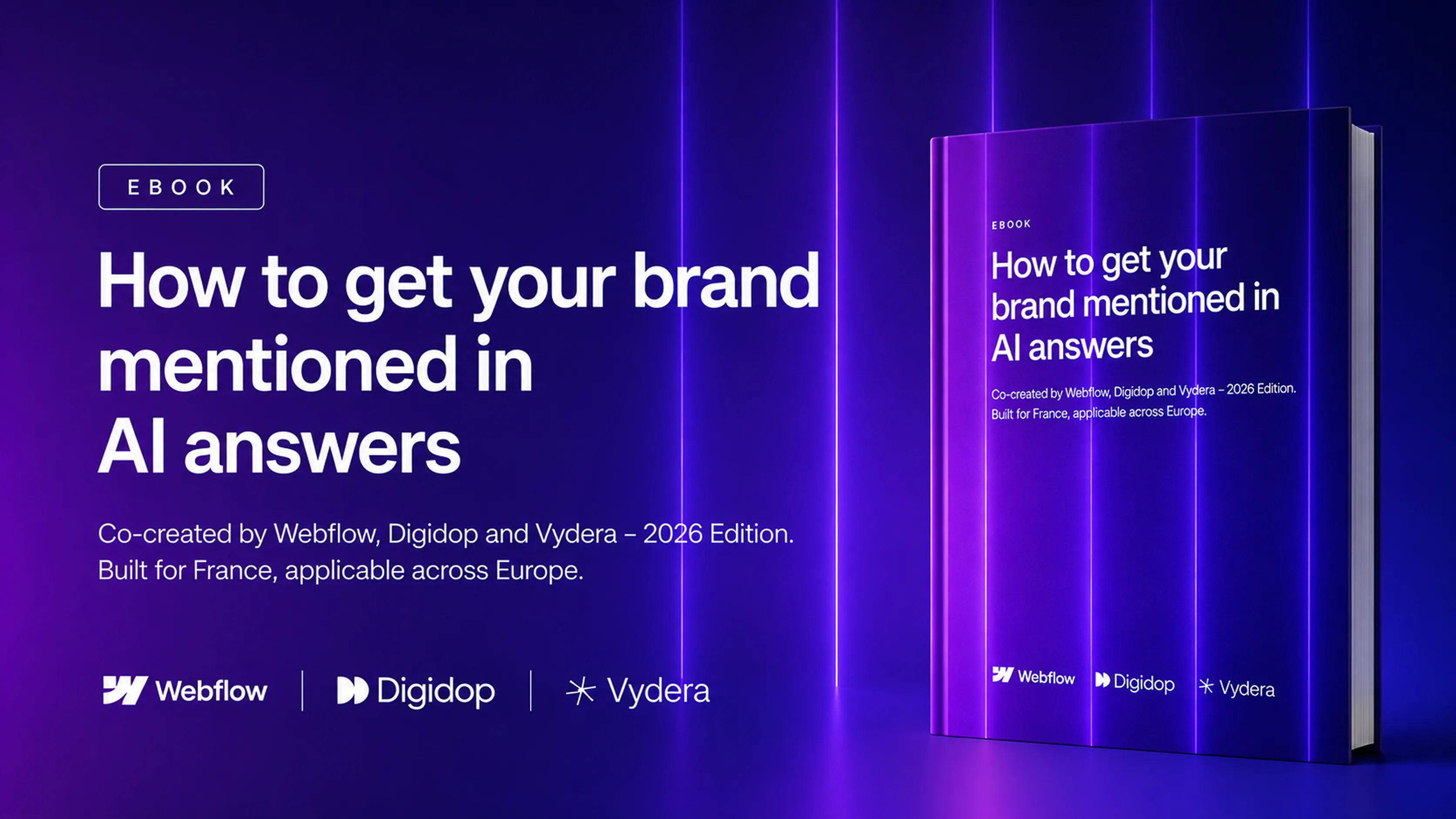
In this free guide, discover how to prepare your website for Google, ChatGPT, Perplexity, Gemini, and the next generations of AI agents through a practical methodology, examples, and technical recommendations.



.webp)